
Study Guides › Traffic Signs › Control Signs
Control signs
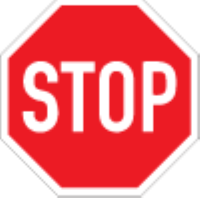
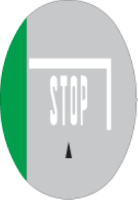
| Name: | Stop sign (R1.1) |
| Where: | At intersections, railway crossings and scholar patrols. |
| Purpose: | To bring traffic to a stop. |
| Action: | Bring your vehicle to a stop behind the stop line.
|
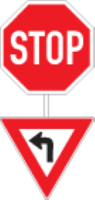
| Name: | Stop/yield sign (R1.2) |
| Where: | At intersections. |
| Purpose: | To allow traffic turning left, to do so (if it can be done without interfering with cross traffic) without stopping. |
| Action: | If you intend to carry straight on, bring your vehicle to a standstill behind the stop line.
|
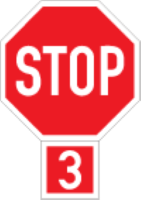
| Name: | 3-way stop (R1.3) |
| Where: | At intersections. |
| Purpose: | To bring traffic from all three directions to a stop |
| Action: | If more than one vehicle stops at the intersection, the vehicle, which stopped first, should move off first.
|
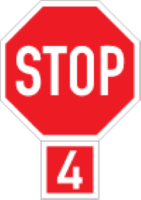
| Name: | 4-way stop (R1.4) |
| Where: | At intersections. |
| Purpose: | To bring traffic from all four directions to a stop. |
| Action: | Bring your vehicle to a standstill behind the stop line.
|

| Name: | STOP/RY-GO sign (R1.5) |
| Where: | Usually at road works for temporary traffic control. |
| Purpose: | These are two different signs, which are mounted back to back. It indicates whether you may proceed or must stop. |
| Action: | Stop if the STOP sign is displayed and move off or proceed with caution if safe when the GO sign is displayed. |
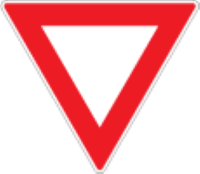
| Name: | Yield sign (R2) |
| Where: | At intersections and railway crossings. |
| Purpose: | To indicate that you must yield to other traffic. |
| Action: | If other traffic is approaching the intersection, reduce speed and, if necessary, stop. |
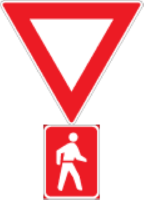
| Name: | Yield to pedestrians (R2.1) |
| Where: | At intersections and pedestrian crossings |
| Purpose: | To compel you to give priority to pedestrians crossing the road or wanting to cross the road. |
| Action: | Look out for pedestrians crossing the road or near the road and be ready to stop. |
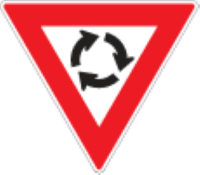
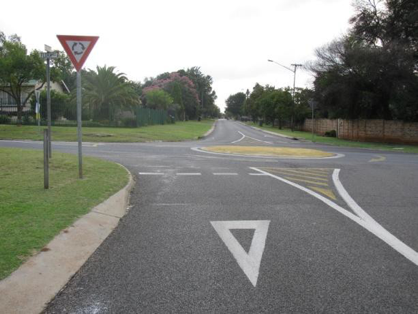
| Name: | Yield at traffic circle (R2.2) |
| Where: | At traffic circles, particularly mini circles. |
| Purpose: | To warn you that there is a traffic circle ahead where they must expect to yield. |
| Action: | Look out for other vehicles and yield to vehicles already in the circle or that will cross the yield line at their entrance to the circle before you will cross yours. Stop if necessary.
|
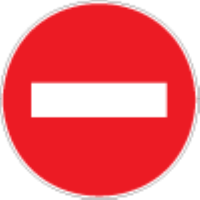
| Name: | No entry (R3) |
| Where: | Usually found at the end of a one-way street, at the end of an off-ramp or at intersections where two-way traffic roads change to one-way traffic. |
| Purpose: | To indicate that no traffic may proceed past the sign on the road, carriageway or lane. |
| Action: | Do not enter the carriageway where this sign is displayed. |

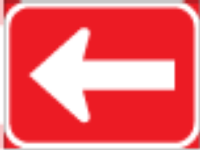

| Name: | One-way roadway (R4.1, R4.2 and R4.3) |
| Where: | At intersections where a one-way road joins another road. |
| Purpose: | To indicate that there is a one-way carriageway to the left, right, or ahead. |
| Action: | Proceed in the direction of the arrow only if you want to use that specific carriageway. |
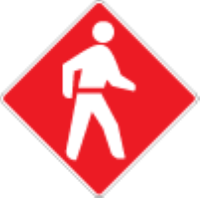
| Name: | Pedestrian priority (R5) |
| Where: | At the entrance to an area intended for pedestrians. |
| Purpose: | To give priority to pedestrians but limit other traffic to emergency vehicles, vehicles loading and off loading goods and maintenance vehicles. |
| Action: | When driving any of the above-mentioned vehicles, drive carefully in the area at a maximum speed of 15 km/h.
|
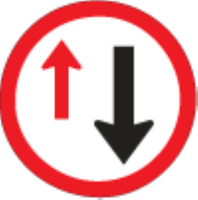
| Name: | Yield to oncoming traffic (R6) |
| Where: | At the entrance to any road intended for dual way traffic. |
| Purpose: | To indicate that there is a single carriageway ahead for use by vehicle from both directions. |
| Action: | Look out for other vehicles and yield to vehicles already in the carriageway. |